My Sister’s Bones: A Haunting Portrait of Trauma and the Ghosts We Carry Home
- Category: Thriller, Mystery, Drama
- Release Date: January 30, 2026 (VOD / Digital)
- Cast: Olga Kurylenko, Anna Friel, David Bradley, Maggie Steed, Ben Miles, Max Brown
- Language: English
- Duration: Approx. 1h 40m
- Distributor: Quiver Distribution
- Based on: The novel by Nuala Ellwood
- Rating: Not Rated (Contains Violence and Mature Themes)
The psychological thriller genre thrives on the concept of the “unreliable narrator”—a protagonist whose perception of reality is fractured by trauma, addiction, or grief. On January 30, 2026, Quiver Distribution adds a compelling new entry to this canon with My Sister’s Bones. Based on the acclaimed novel by Nuala Ellwood, the film brings together a powerhouse British and international cast led by Olga Kurylenko and Anna Friel.
While many direct-to-VOD thrillers suffer from formulaic plots, My Sister’s Bones distinguishes itself through its atmosphere of suffocating dread and its exploration of PTSD. It asks a terrifying question: What happens when the person who witnesses a crime is the one person no one believes? For the audience on fmovies.tr who enjoy the dark, twisting narratives of The Girl on the Train or Sharp Objects, this film offers a chilling winter watch that blurs the line between the horrors of war and the horrors of suburbia.
The Plot: The War at Home
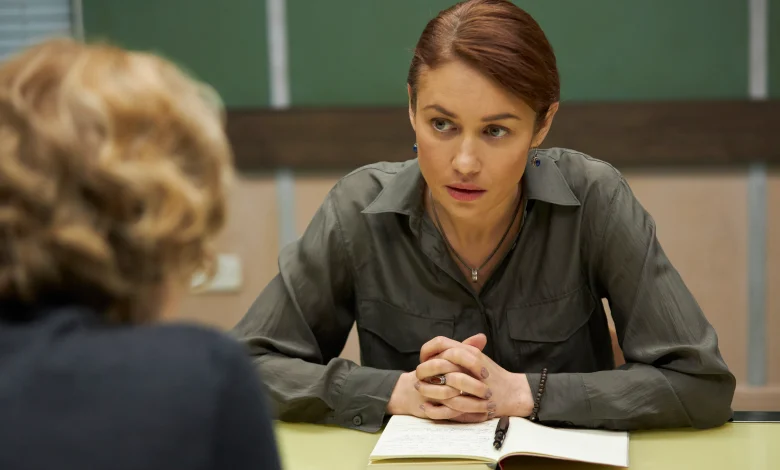
The narrative centers on Kate (Olga Kurylenko), a hardened war correspondent who has spent years documenting the atrocities in Syria and Iraq. She is a woman defined by her trauma, haunted by the faces of the children she couldn’t save. Following a particularly harrowing incident in Aleppo and the news of her mother’s death, Kate returns to her childhood home in the sleepy, grey town of Herne Bay, England.
Her return is not a happy one. She is there to settle her mother’s estate and reconnect with her estranged sister, Sally (Anna Friel). Sally is battling her own demons, trapped in a cycle of alcoholism and resentment. The relationship between the two sisters is fraught with years of unspoken secrets and the ghosts of a difficult childhood.
The Boy Next Door
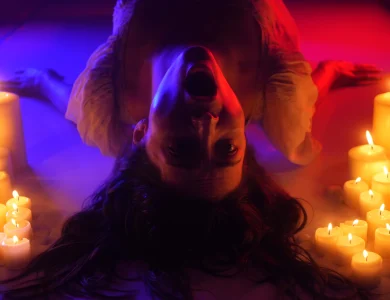
As Kate attempts to pack up her mother’s belongings, her PTSD begins to manifest. She suffers from hallucinations, hearing the sounds of war in the quiet English countryside. However, her paranoia finds a new focus when she becomes convinced that something sinister is happening next door. She hears the cries of a young boy coming from the neighbor’s house—a house occupied by a strange, reclusive woman (Maggie Steed) and an unsettling older man (David Bradley).
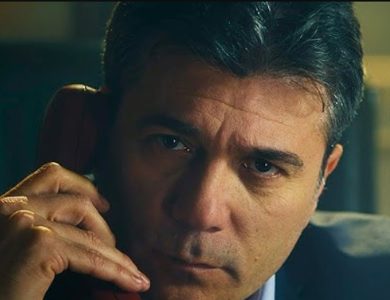
Kate believes a child is being held captive. But when she reports it to the police (including a skeptical officer played by Ben Miles), her history of mental instability and hallucinations is used against her. Is there really a boy next door, or is Kate projecting the trauma of the war zone onto her neighbors? The film becomes a desperate race for the truth as Kate tries to prove she isn’t “crazy,” all while unearthing dark secrets about her own family’s past.
Cinematic Atmosphere: A World of Grey
Although the director is not explicitly highlighted in the promotional materials, the visual language of My Sister’s Bones is distinct and effective. The film utilizes a desaturated, cold color palette. The English seaside town is depicted not as a holiday destination, but as a place of isolation. The grey skies, the rain-slicked streets, and the clutter of the mother’s house create a sense of claustrophobia.
Sound Design: The film relies heavily on sound to put the audience in Kate’s headspace. The sound design blurs the line between reality and memory. The sound of a car backfiring morphs into a gunshot; a child’s laugh turns into a scream. This subjective audio experience forces the viewer to question everything they hear, aligning our perspective with Kate’s fractured mind.
The House as a Character: The mother’s house is a labyrinth of memories. It feels dusty and oppressive, a physical manifestation of the family’s unresolved trauma. The juxtaposition of this domestic setting with Kate’s flashbacks to the open, dusty ruins of Iraq creates a jarring contrast that emphasizes her displacement. She doesn’t feel at home anywhere.
The Cast: A Study in Broken Women
The film’s greatest strength lies in its performances, particularly from its two female leads.
- Olga Kurylenko as Kate: Kurylenko (Black Widow, Quantum of Solace) delivers a raw, vanity-free performance. She embodies the physical toll of PTSD—the shaking hands, the thousand-yard stare, the sudden outbursts of rage. She plays Kate not as a victim, but as a warrior who has lost her war. It is a demanding role that requires her to be both formidable and incredibly fragile, and she succeeds in making us root for her even when she doubts herself.
- Anna Friel as Sally: Friel (Marcella) is heartbreaking as the sister left behind. While Kate escaped to the war zone, Sally stayed trapped in the domestic war zone of their childhood. Friel portrays the chaotic energy of addiction with painful accuracy. The scenes between the two sisters are electric, filled with the specific kind of cruelty and love that only siblings can share.
- David Bradley: The veteran actor (Harry Potter, Game of Thrones) brings a menacing gravitas to the role of the neighbor. He does a lot with very little dialogue, using his physical presence to create a sense of unease. Is he a monster, or just a misunderstood old man? Bradley keeps the audience guessing until the end.
Critical Review: More Than Just a Mystery
My Sister’s Bones transcends the typical “woman in peril” thriller by adding layers of social commentary and psychological depth.
The Theme of Believability
At its core, the film is about how society treats women’s pain. Both Kate and Sally are dismissed by the men around them—the police, the doctors, the neighbors. Their trauma is inconvenient, so it is labeled as “hysteria” or “madness.” The film effectively critiques the gaslighting that women often face, making the central mystery a metaphor for the struggle to be heard.
The Twist
Without spoiling the ending, the film delivers a twist that recontextualizes the entire story. Fans of the book will appreciate how the adaptation handles the reveal, while newcomers will likely be blindsided. The twist isn’t just a shock value tactic; it forces the audience to re-evaluate every interaction between the sisters. It turns the film from a whodunit into a tragic family drama.
Pacing Issues
If there is a criticism, it is that the second act drags slightly. The repetitive nature of Kate’s investigations—spying on the neighbors, getting caught, being warned by the police—can feel a bit circular. However, the emotional intensity of the flashback sequences helps to maintain the momentum.
Production Value
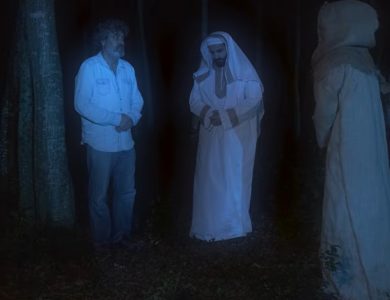
As a VOD release, the film manages to look cinematic. The use of shadow and light in the night sequences is particularly effective. The editing is sharp, especially during Kate’s panic attacks, creating a visceral sense of confusion.
My Sister’s Bones is a tense, atmospheric, and emotionally resonant thriller. It is a film that lingers in the mind, not just for its mystery, but for its portrayal of the enduring damage of trauma.
Olga Kurylenko and Anna Friel elevate the material with performances that are both fierce and tender. It is a story about the monsters we fight in the world, and the monsters we find when we come home. For anyone looking for a sophisticated psychological drama that keeps you guessing until the final frame, My Sister’s Bones is a worthy addition to your watchlist.